How to Order Food in Thai: A Complete Guide for beginners and Tourists
Ordering food in Thailand can be an exciting adventure! This comprehensive guide will help you navigate Thai restaurants and street food stalls with confidence. Learn essential Thai phrases, cultural etiquette, and insider tips for a memorable dining experience.
Common Food in Thai
Rice Dishes
– Rice ข้าว (kâaw)
– Fried rice ข้าวผัด (kâaw pàd)
– Plain rice ข้าวเปล่า (kâaw bplàaw)
Types of Meat
– Chicken ไก่ (gài)
– Pork หมู (mŭu)
– Beef เนื้อวัว/เนื้อ (néua/néua wua)
– Fish ปลา (bplaa)
– Shrimp กุ้ง (gûng)
– Duck เป็ด (bpèd)
– Squid ปลาหมึก (bplaa mèug)
– Crab ปู (bpuu)
– Shellfish หอย (hŏoy)
Cooking methods
– grilled ย่าง (yâang)
– fried ทอด (tôord)
– stir-fried ผัด (pàd)
– Steamed นึ่ง (nêung)
– Roasted เผา (păo)
Popular Dishes
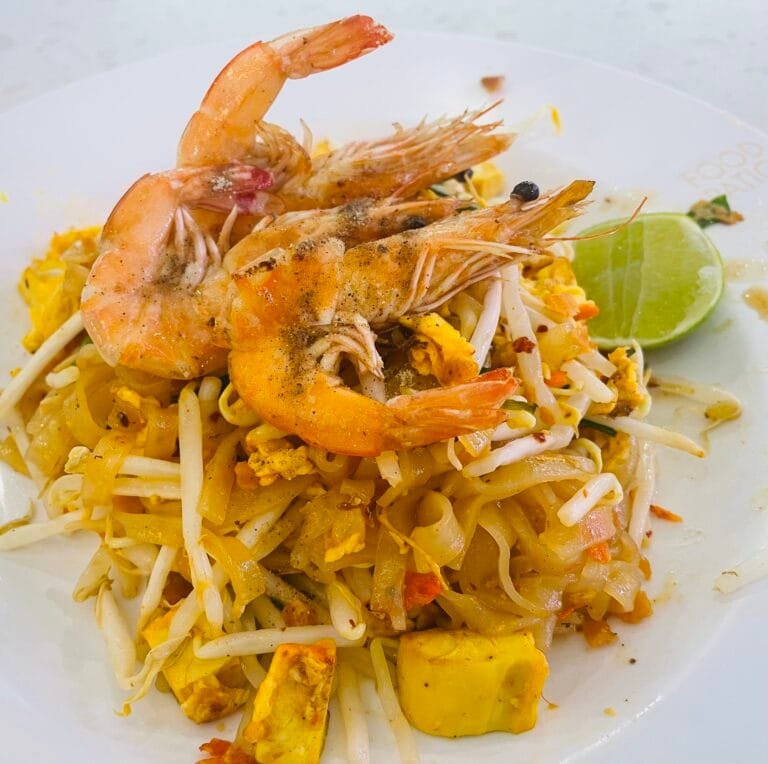
– Stir-fried rice noodles ผัดไทย (Pad Thai-pàd tai)
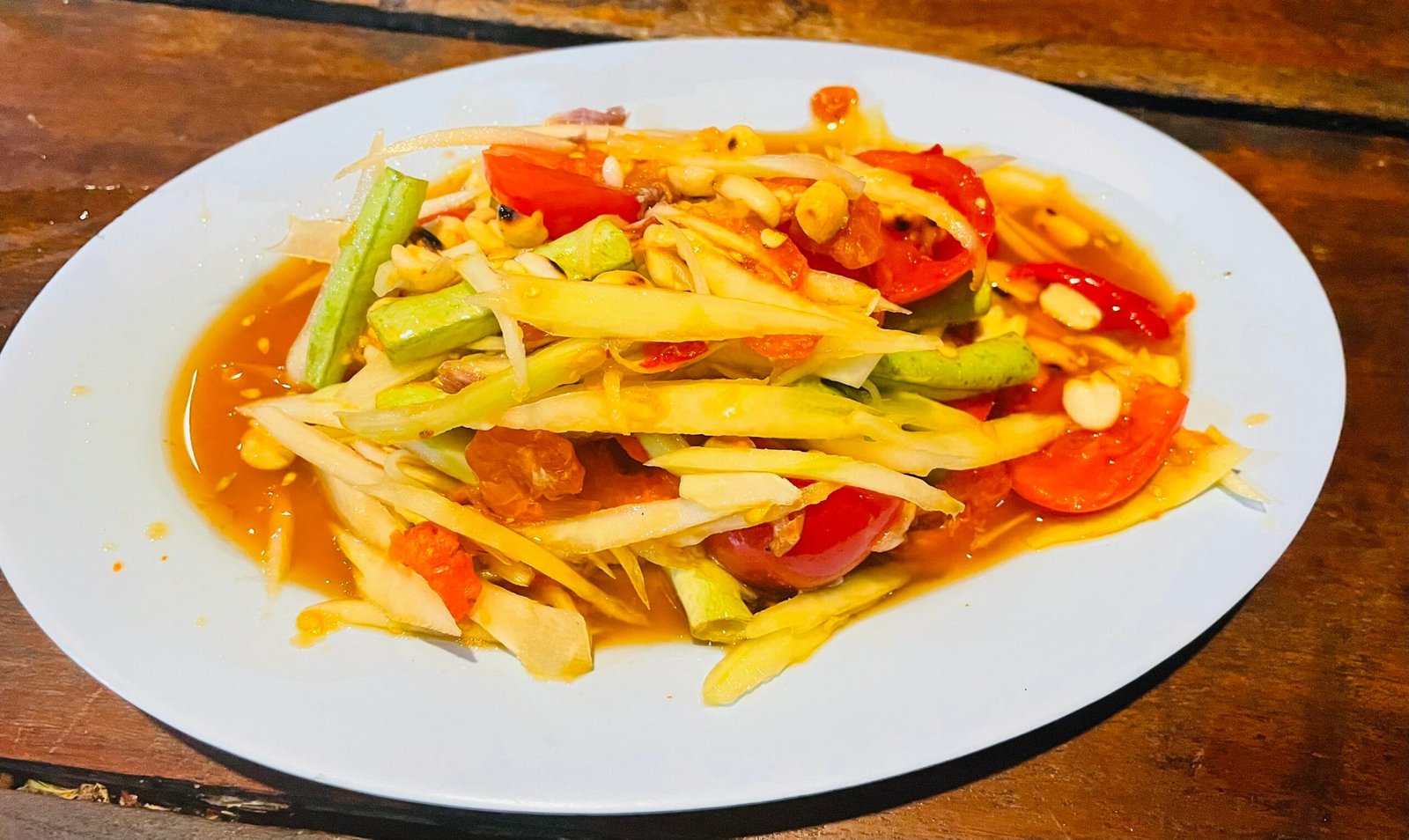
– Spicy papaya salad ส้มตำ (Som Tam-sôm dtam)
– Spicy and sour soup ต้มยำ (Tom Yum-dtôm yam)
– Green Curry แกงเขียวหวาน (Gaeng kĕow wăan)
– Coconut Chicken Soup ต้มข่าไก่ (Dtôm kàa gài)
– Minced Pork Omelette ไข่เจียวหมูสับ (Kài djiaw mŭu sàb)
– Curry Powder Stir-fried Shrimp กุ้งผัดผงกะหรี่ (Gûng pàd pŏng ga rèe)
– Spicy Instant Noodle Salad with Mixed Ingredients ยำมาม่ารวมมิตร (Yam maa mâa ruam míd)
– Pork Fried Rice ข้าวผัดหมู (Kâaw pàd mŭu)

Thai Taste Vocabulary and Flavor Preferences
Basic Tastes
– sweet หวาน (wăan)
– sour เปรี้ยว (bprîaw)
– salty เค็ม (kem)
– spicy เผ็ด (pèd)
– bitter ขม (kŏm)
Spicy Levels
– Not spicy ไม่เผ็ด (mâi pèd)
– A little spicy เผ็ดน้อย (pèd nóoy)
– Very spicy เผ็ดมาก (pèd mâag)
Dietary Restrictions
– Vegetarian มังสวิรัติ (mang-sa-wi-rád)
– No meat ไม่ใส่เนื้อสัตว์ (mâi sài néua sàd)
– No MSG ไม่ใส่ผงชูรส (mâi sài pŏng chu ród)
-No____/Don’t put ___ in it. ไม่ใส่___ (mâi sài ____)
Ex. No fish sauce ไม่ใส่น้ำปลา (mâi sài náam bplaa)
Common Seasonings
– Fish sauce น้ำปลา (náam bplaa)
– Sugar น้ำตาล (náam dtaan)
– Chili พริก (príg)
– Lime มะนาว (ma-naaw)
– MSG ผงชูรส (pŏng chu ród)

Thailand’s Essential Seasoning: Príg náam bplaa พริกน้ำปลา
Did you know that Príg náam bplaa พริกน้ำปลา (Thai Chili Fish Sauce) is like a condiment, like salt and pepper on Western dining tables? Príg náam bplaa พริกน้ำปลา isn’t just made from chilies and fish sauce. It contains chilies, fish sauce, lime juice, garlic, and a touch of sugar. It enhances the flavor of food. With just hot steamed rice, boiled eggs, and Prik Nam Pla, you can have an easy meal.
In Thai food stalls, you’ll always find Príg náam bplaa พริกน้ำปลา in a container on the table. If you don’t see it and would like to try it, feel free to ask the vendor. You can say “Can I have some chili fish sauce?” ขอพริกน้ำปลาได้ไหมครับ/คะ (kŏor príg náam bplaa dai mai krap?).
Start by tasting a small amount first – don’t pour it all over your dish at once, as it might be too salty or spicy for your taste.
Sample Dialogues: How to order in Thai.
Scenario 1: Ordering at a Restaurant
You: Call server’s attention. น้องครับ/ค่ะ (nóorng kráb/kâ)
– Menu, please: ขอเมนูหน่อยครับ/ค่ะ (kŏor menu nòy kráb/kâ)
– Ready to order: สั่งอาหารครับ/ค่ะ (sàng aa-hăan kráb/kâ)
Waitress: Hello. สวัสดีค่ะ (Sa-wàd-dee kráb/kâ)
What would you like to order? รับอะไรดีคะ (rab arai dee ká)
You: One bottle of water, please
ขอน้ำเปล่าขวดนึงครับ/ค่ะ (kŏor náam bplàaw kùuad neung kráb/kâ)
And chicken fried rice and papaya salad, not spicy please.
และเอาข้าวผัดไก่กับส้มตำ ไม่เผ็ดครับ/ค่ะ (láe ao kâaw pàd gài gáb sôm dtam mâi pèd kráb/kâ)
Restaurant Etiquette:
1. Wait to be seated at formal restaurants
2. Thai people use a spoon and fork (spoon in right hand, fork in left).
3. Don’t stick chopsticks vertically in rice.
4. You can share dishes with your companions (family-style eating is common).
Scenario 2: Ordering Street Food
You: One Pad Thai, not spicy, please.
ผัดไทยหนึ่งที่ ไม่เผ็ดครับ/ค่ะ (pàd thai nèung tîi mâi pèd kráb/kâ)
Vendor: Would you like shrimp with that? ใส่กุ้งไหมคะ (sài gûng mái ká?)
You: Yes, please add shrimp. ใส่ครับ/ค่ะ (sài kráb/kâ)
Vendor: For here or to go? กินที่นี่หรือเอากลับบ้านคะ (gin têe nêe rŭe ao glàb bâan ká)
You: Take away. ใส่ถุง (sài tŭng) (put in bag) เอากลับบ้านครับ/ค่ะ (ao glàb bâan kráb/kâ)
Street Food Tips:
1. Look for busy stalls with high turnover.
2. Observe how locals order and eat.
3. Keep small bills handy.
4. If you don’t know what a dish is called in Thai, but it looks delicious and you want to try it, just point and order “ao an née kráb/kâ” เอาอันนี้ครับ/ค่ะ (This one, please.) Specify quantity: one หนึ่ง “nèung”, two สอง “sŏorng” … “têe” ที่ (portions).
At Food Courts
– Buy coupons/card first: Usually at a central counter
– Order using coupons: Show coupon value to vendor
– Return unused coupons: Get a refund before leaving

Payment Methods and Etiquette: Common Phrases for Payment
– Bill please. เช็คบิลด้วยครับ/ค่ะ (Check bin dûay kráb/kâ)
– How much? เท่าไรครับ/คะ (tâo rài kráb/ká?)
– If I pay with a 1,000 Baht note. ถ้าให้แบงค์พัน (tâa hâi báng pan)
Do you have change? มีทอนไหมครับ/คะ (mee toorn mai kráb/ká?)
-Keep the change. ไม่ต้องทอนครับ/ค่ะ (mâi dtông toorn kráb/kâ)
Payment Tips
1. “Cash is King”
– Keep small bills handy (20, 50, 100 Baht notes)
– Avoid paying with 1,000 baht notes at small venues
– Small restaurants and street food vendors usually accept both cash and QR code payments.
2. Modern Payment Methods
– QR code payments (Thai PromptPay system)
– Mobile payments (TrueMoney, Rabbit LINE Pay)
– Credit cards (mainly in shopping malls and high-end restaurants)
3. Tipping Culture
– Most restaurants in shopping malls charge a 10% service charge and 7% VAT (Value Added Tax), which means you don’t need to pay an additional tipใ
– At restaurants without a service charge, you can tip as you wish, starting from 20 Baht. You can leave the tip on the table or put it in the tip box.
Giving compliments
If you’d like to give compliments to the restaurant, you can say:
– Delicious. อร่อยครับ/ค่ะ (aròy kráb/kâ)
– Very delicious. อร่อยมากครับ/ค่ะ (aròy mâag kráb/kâ)
– This is really good! อันนี้อร่อยจริงๆ ค่ะ/ครับ (an née aròy djing djing kráb/kâ)
– Great service! บริการดีมากครับ/ค่ะ (ba-ri-gaan dee mâag kráb/kâ)
– I’ll come back again!” จะกลับมาทานอีกนะครับ/คะ (dja glàb maa taan èek ná kráb/ká)
– Thank you very much. ขอบคุณมากครับ/ค่ะ (kòorb kun mâag kráb/kâ)
Enjoy your meal! ทานให้อร่อยนะคะ taan hâi aròy na ká!